











Creating a Traditional South Asian Look with Gemini AI
A simple guide on creating a detailed, culturally rich South Asian digital portrait using Gemini AI, focusing on clear prompts, accurate features, and soft, dreamlike visuals.

-
Introduction
In the last few years, AI-generated images have become super popular. People everywhere are making portraits, landscapes, fantasy characters, and so many other cool things using just a single text prompt. It still feels a bit magical, like you type a sentence and suddenly an image appears, almost like drawing with words. One of the tools that can do this really well is Gemini AI, which is known for creating very detailed and realistic portraits.
Gemini AI is good at noticing little things, like tiny lines on the face, soft shadows, fabric textures, and even the shine on jewelry. That’s why many people use it when they want an image to look close to real life. In this blog post, we’re going to talk about something very specific: how to create a culturally rich, accurate digital portrait of a South Asian woman using a detailed prompt. And we will also see why every tiny detail in the prompt matters a lot.
-
The Prompt of South Asian Woman
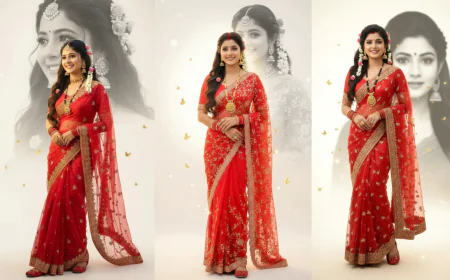
"Use the uploaded model as the subject. Her facial structure, complexion, expression, and overall look must match the model exactly, without any alteration. Depict her as a young South Asian woman in her early twenties, positioned in the center and looking slightly to her right. She has fair skin and dark, wavy hair cascading over her shoulders, matching the model’s natural texture and flow.
She is dressed in a traditional dark blue sari with intricate gold embroidery and embellishments, paired with matching gold jewelry — a necklace, earrings, and a headpiece. She wears a small bindi and a nose ring. Her expression is gentle with a soft smile, highlighting her natural lips exactly as seen in the model photo.
The background features a soft gradient of blue and red, creating a subtle yet vibrant contrast. Lighting is diffused and warm, enhancing the texture of her hair, the shine of her jewelry, and the richness of the sari. The image should be a close-up portrait focusing on her face and upper body, with a soft, dreamlike aesthetic while keeping the model’s face unchanged."
-
The Prompt Breakdown
When you’re making AI images, the most important thing is the prompt. Think of it like giving instructions to someone who can’t see your mind but can draw exactly what you describe. If your instructions are clear, the AI understands better. If they are too short or confusing, the result won’t look like what you imagined.
A good prompt tells the AI about:
- Who the subject is
- How the face should look
- What the person is wearing
- What emotions they show
- How the lighting and background should appear
For example, if we want the AI to recreate a South Asian woman with a specific facial structure, we need to talk about her skin tone, her expression, her features, and even how her hair naturally falls. The more exact we are, the more the AI will match the original model.
Describing attire is also very important. A sari is not just a cloth—it’s cultural, it has patterns, embroidery, draping styles. Jewelry also tells a story: the necklace, earrings, bindi, headpiece, and nose ring each adds cultural richness.
Even the background matters. A soft gradient or a warm light can change how the whole portrait feels. It creates a mood, like a gentle dreamlike atmosphere or a bright festive look.
So when we break the prompt into pieces—subject, features, clothes, jewelry, background, and lighting—we are actually building the image layer by layer.
-
The Subject: South Asian Woman
In this case, the model we are describing is a young South Asian woman. She is in her early twenties, and she has a very soft and gentle expression. The prompt says she must look exactly like the uploaded model, so the AI needs to match her face 100%. That means the structure of the jaw, the shape of her lips, the curve of her nose, the size of her eyes—all of that must stay the same.
Her complexion is fair, and her hair is long, dark, and wavy. One thing people often forget is that hair texture matters a lot in AI images. If the model has naturally wavy hair, the AI should not accidentally make it too straight or too curly. So the prompt has to mention that the hair flows over her shoulders in a natural, soft way.
Because this is a cultural portrait, the clothing and accessories are super important. She is wearing a dark blue sari with gold embroidery, which is common in festive South Asian wear. The gold necklace, earrings, and headpiece add a beautiful traditional feel. The bindi on her forehead and the nose ring highlight her cultural identity. These little details help the image feel real and respectful, not like a random costume.
-
Visual Elements and Composition
Now let’s talk about how the portrait is arranged. This is a close-up image, which means the focus is mostly on her face and upper body. Close-up portraits usually show more emotion and capture tiny details that might be missed in a full-body shot.
The lighting in this artwork is described as warm and diffused. Diffused light is soft, and it spreads gently, so it doesn’t create harsh shadows. This type of lighting is great for portraits because it makes the skin look smooth and highlights the textures of jewelry and fabric without making the picture too shiny.
The background has a soft gradient of blue and red, which gives a dreamy feeling. The blue adds calmness, while the red adds energy. When they blend together behind the subject, it creates a nice balance that makes the portrait stand out.
Backgrounds in AI artwork are not just decoration—they set the tone. A harsh background distracts, but a smooth one helps the viewer focus on the subject.
-
Creating the Image with Gemini AI
Now comes the exciting part: how Gemini AI takes the prompt and turns it into an actual portrait. Gemini AI reads each part of the prompt like clues. When we say “face must match the uploaded model exactly,” the AI tries to keep every small detail the same. When we describe the sari, jewelry, and lighting, the AI layers those elements on top while still keeping the face unchanged.
One challenge is that matching a real person’s face perfectly can be tricky. Sometimes the AI gets very close but makes tiny changes. That’s why the prompt must repeat things like “do not alter facial structure” or “must match the model exactly.”
Another challenge is capturing embroidery, shiny jewelry, and soft lighting at the same time. Gemini AI is good at fine details, but it still depends on how well the prompt explains those details. If you forget something important, like the direction she is looking or the kind of smile she has, the AI might improvise.
When the final image appears, it often feels like a mix of art and technology. The viewer can see the cultural richness, the elegance of the sari, the warmth of the lighting, and the softness of her expression. People usually feel amazed that a few lines of text can create something so life-like.
-
Conclusion
Creating AI-generated portraits is not just about typing random words. A detailed prompt can make a huge difference in how accurate and beautiful the final result looks. When we include cultural elements, exact facial features, natural textures, and a clear artistic vision, the AI understands us better.
If you enjoy making creative images, Gemini AI is worth exploring. It’s powerful, easy to experiment with, and can bring your imagination to life in ways that feel almost magical.
So go ahead—try writing your own prompts, play with styles, and see what kind of amazing portraits you can create next!
What's Your Reaction?
 Like
0
Like
0
 Dislike
0
Dislike
0
 Love
0
Love
0
 Funny
0
Funny
0
 Angry
0
Angry
0
 Sad
0
Sad
0
 Wow
0
Wow
0